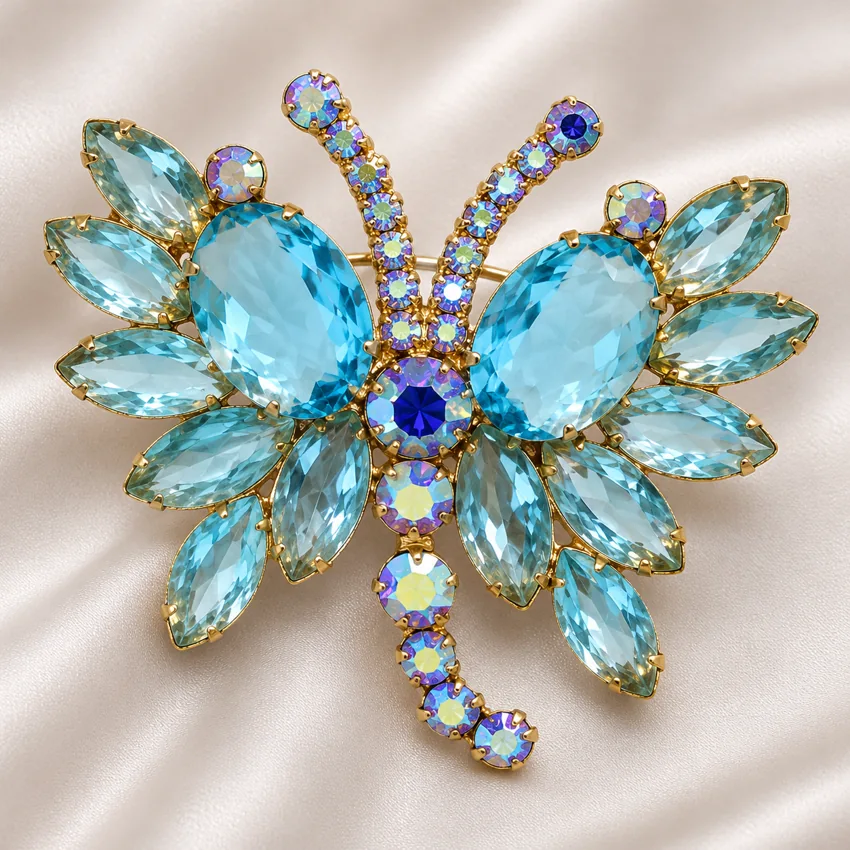
Verified Juliana
DeLizza & Elster jewelry was generally unmarked; an original Juliana paper hangtag is occasionally found. Compare construction and documented designs for identification.
A resemblance or dealer description is not verification.Discover the stories, craftsmanship and details behind collectible jewelry. Learn what to look for, explore the eras and makers you love, then browse what is available.
From an unmistakable designer signature to an unsigned treasure, explore the stories and details that make vintage jewelry worth discovering.
Learn the history. Recognize the details. Follow your curiosity.
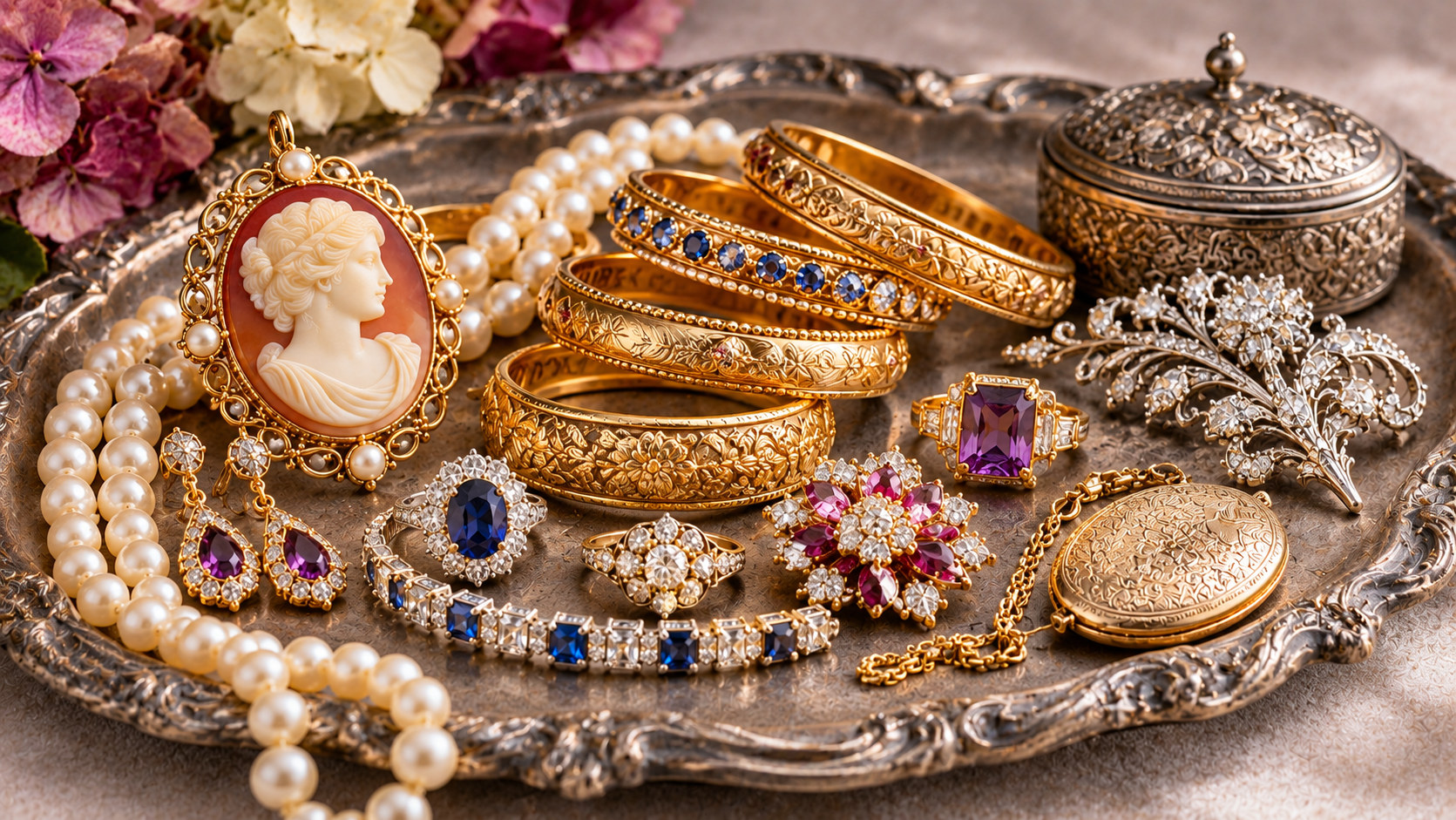
Get to know the makers behind collectible costume jewelry. Open a company profile for its story, signature clues and research references; browse eBay and Etsy examples directly from each maker’s card.
As an eBay Partner Network Affiliate, we may earn from qualifying purchases through eBay links. Some other marketplace links may also earn us a commission, at no additional cost to you.
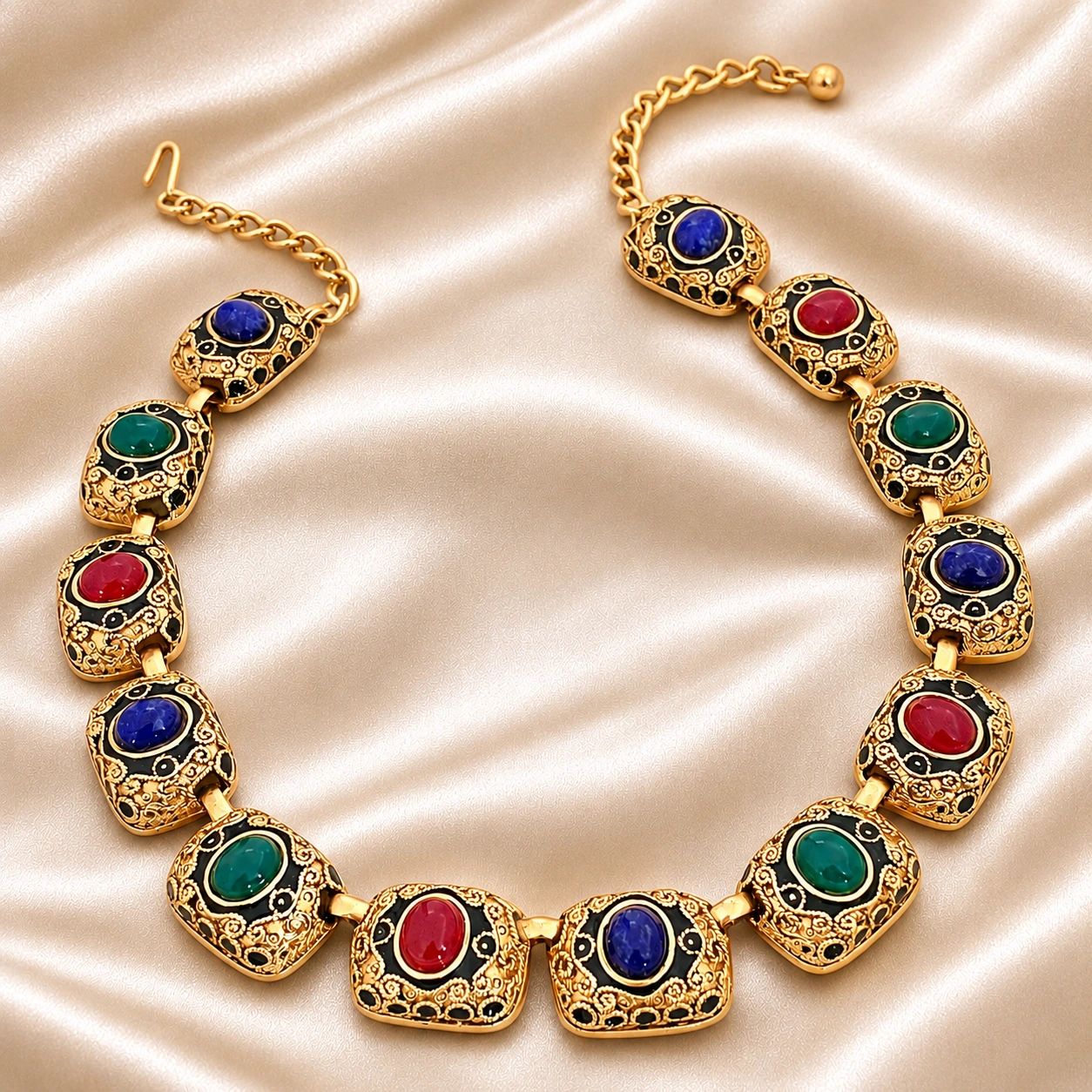 Signed Costume JewelryExplore the stories, signatures and collecting history of 64 featured jewelry makers. Open any designer for a richer guide.
Browse the makers alphabetically. Use eBay and Etsy to explore jewelry examples directly from each maker’s listing, or open a profile for company history, signatures, and research references. A matching seller description or maker’s mark alone does not establish authenticity.
A selective guide to designers and manufacturers especially relevant to collectors. For other makers, common production lines, signatures and aliases, use the full Research Marks A–Z reference.
Browse the complete Maker’s Marks & Identification reference →
Accessocraft was founded in New York in 1930 by Edgar Roedelheimer and Theodore Steinman, both previously involved in the jewelry trade. Known for heraldic brooches, elaborate chains, jewelry and accessories such as belts. Sources differ between a 1996 company close and a late-1990s cessation; present as approximate rather than precise.
Documented marks and search terms: Accessocraft · Accessocraft NYC · Accessocraft N.Y.C.
Company history and maker-reference research · Costume Jewelry Collectors International — Accessocraft
Alice Caviness marketed distinctive costume jewelry, often incorporating colorful beads, stones and designs influenced by international styles.
Anne Klein founded her New York clothing company in 1968 and developed an internationally licensed fashion brand. Following her death in 1974, other designers continued her collections. Signed jewelry reflects successive licensing arrangements and manufacturers, not necessarily production by Klein herself.
Documented marks and search terms: Anne Klein · AK · lion head with AK · lion head AK · Anne Klein lion · lion logo jewelry.
Mode-Art was a New York costume-jewelry business established by Arthur Pepper. Its signed ART pieces include ornate decorative and figural designs, often incorporating rhinestones and colored stones. Its operating dates are typically placed in the mid-20th century, but an exact final manufacturing date is not established. A mark reading ART is not proof of art-period or country.
Documented marks and search terms: ART · MODE-ART · Mode Art · ART MODE-ART · Arthur Pepper ART.
British costume jewelry maker known for decorative brooches and historically inspired styles. The company and its A&S signature should be researched separately from American A&S initials.
A&S; verify stamp and construction before attribution.
See the linked alphabetical reference for identification leads; corroborate dates and marks against original catalogues, advertisements or trademark records.
CJCI alphabetical research index
David H. McConnell founded the California Perfume Company in 1886, which adopted the Avon name in 1939. Avon’s own corporate history dates direct sales of jewelry to 1971, following earlier promotional offerings. Avon-branded jewelry may have been made by different contract suppliers and designer collaborators, so an Avon stamp does not establish a single place of manufacture.
Documented marks and search terms: Avon · Avon mark · AVON KJL · AVON ELIZABETH TAYLOR.
Beaucraft is known for sterling silver jewelry, including charms, novelty brooches and mid-century designs.
Henry Bogoff of Chicago designed costume jewelry associated with Spear Novelty Co. U.S. patent records from 1948 identify Bogoff as the inventor of an earring design assigned to Spear Novelty, independently confirming that manufacturing/design relationship. Historical production is chiefly mid-century; precise ending remains uncertain.
Documented marks and search terms: Bogoff.
Marcel Boucher, formerly trained in fine jewelry work, founded his own New York jewelry concern in 1937. His signed pieces were known for sophisticated metalwork and stone settings; inventory and design numbering can aid dating when compared with established records. Production continued after the founder’s death under later ownership.
Documented marks and search terms: Boucher · Marcel Boucher · MB · Boucher Phrygian cap.
Butler & Wilson is a British fashion-jewelry name known for dramatic rhinestone pieces and imaginative novelty motifs.
Castlecliff was established in New York in 1918 by Clifford Furst and Joseph Bobley. It became known for dramatic costume jewelry made using colored stones, innovative settings and large-scale forms. Castlecliff has been revived as a modern brand, so the closure of the historic operation should not be confused with present jewelry bearing its name.
Documented marks and search terms: Castlecliff.
Chanel introduced costume jewelry as part of its fashion vocabulary. Signatures have included CHANEL text, circular plates, interlocking CC logos, later oval plaques and date/season codes. Early examples can be unsigned. Poured glass associated with Maison Gripoix is a technique and supplier relationship, not a maker stamp proving Chanel attribution. Jewelry mark styles vary widely by period.
Documented marks and search terms: CHANEL · Chanel Made in France · CHANEL CC · interlocking CC · double C logo · CHANEL oval plaque · CHANEL round plaque · Chanel season code.
Chanel mark period guide · Chanel costume jewelry authentication guide
Founded in 1892 in New York City, Ciner developed from fine jewelry into high-quality costume jewelry. Its own corporate history identifies an ongoing family-run business still making jewelry in New York, so an end-of-manufacturing year should not be assigned to the entire brand.
Documented marks and search terms: Ciner.
Ciner company profile describing continued New York manufacture
Established in New York as Cohn & Rosenberger in 1902. Coro became a leading costume-jewelry producer. Its Rhode Island subsidiary began in 1910; in 1929 it moved its manufacturing, stock and shipping operations into the large plant at 167 Point Street, Providence. The Rhode Island Historical Society records additional sites in Olneyville and Bristol. Coro was especially associated with elaborate rhinestone brooches, Duette double-clip pieces, and CoroCraft jewelry.
Documented marks and search terms: CORO · CoroCraft · Coro Craft · Pegasus (Coro) · Coro Duette · Duette Coro · Coro Pegasus · winged horse.
Providence operations: Chestnut Street, later 167 Point Street (1929–1979), plus plants at Olneyville and Bristol.
Corocraft denotes a higher-end Coro line; the presence or absence of a signature alone does not establish a date or attribution.
Providence Jewelry District industrial history · Rhode Island Historical Society — Coro company records
Danecraft is especially associated with sterling silver jewelry, including floral and figural brooches and bracelets.
Norwegian silver and enamel house known to collectors for Scandinavian design, guilloché enamel and silver jewelry. Fine silver as well as collectible decorative jewelry belongs in cross-category research.
David-Andersen, D-A, Norway, 925S and related variations; verify exact period.
See the linked alphabetical reference for identification leads; corroborate dates and marks against original catalogues, advertisements or trademark records.
CJCI alphabetical research index
Ralph DeRosa’s costume jewelry is associated with bold sculptural designs, rich settings and striking vintage brooches.
Canadian fashion jewelry with rhinestones and metal designs.
Documented marks and search terms: D'Orlan · D Orlan · Dorlan.
The Eisenberg family developed its business in Chicago as a clothing manufacturer in the early twentieth century; sparkling dress decorations evolved into collectible costume jewelry marketed with Eisenberg signatures. The fashion jewelry name persisted under later owners, so company founding and manufacture of a specific piece should be separated.
Documented marks and search terms: Eisenberg · Eisenberg Ice · Eisenberg Original.
Erwin Pearl founded his New York jewelry business in 1952 and expanded into fashion and costume jewelry around 1970. Known for sculptural gold-tone designs, decorative brooches, chains, and polished statement pieces, the firm also produced sterling silver and gold-filled jewelry.
P.E.P. / PEP (associated with Erwin Pearl) · Erwin Pearl (documented from 1983) · E. Pearl (1991) · E.P. (2001). P.E.P. has been found together with the Erwin Pearl signature on the same earring; do not confuse an isolated E.P. mark with a definitive attribution without other evidence.
A British costume jewelry label particularly associated with floral brooches and mid-century styling; it is not a maker name that alone establishes exact date.
Exquisite; not all pieces were marked.
See the linked alphabetical reference for identification leads; corroborate dates and marks against original catalogues, advertisements or trademark records.
CJCI alphabetical research index
Dan Kasoff’s New York business used the Florenza mark from approximately 1950. The line is associated with ornate antique-revival settings and also supplied selected wholesale accounts. Family-provided historical accounts date the original Florenza business closure to February 1981.
Documented marks and search terms: Florenza.
Company history and maker-reference research · Specialist company history with family-provided information
Designer fashion jewelry and licensed accessories; jewelry dates vary by production line.
Documented marks and search terms: Givenchy · Givenchy Paris.
Goldette is especially known for antique-inspired costume jewelry, dangling chains, lockets and layered necklaces.
Distinctive layered and often sculptural beaded costume jewelry made during the mid-to-late twentieth century. Attribution should take the actual construction and signature into account.
Stanley Hagler, Stanley Hagler N.Y.C.; verify later-work attributions separately.
See the linked alphabetical reference for identification leads; corroborate dates and marks against original catalogues, advertisements or trademark records.
CJCI alphabetical research index
Hattie Carnegie developed a celebrated New York fashion business that offered hats, apparel, accessories and jewelry. The business continued after her death in 1956 under later management, and a university fashion archive dates continued production of jewelry and accessories to 1976. The designer’s death date must not be used as the manufacturing-end date.
Documented marks and search terms: Carnegie · Hattie Carnegie · Hattie Carnegie script.
Elaborate crystal statement jewelry and vintage-inspired settings.
Documented marks and search terms: Heidi Daus · Heidi Daus CN · HD.
Hobé developed from a European jewelry family into a U.S. fashion-jewelry business known for elaborate brooches and jewelry used in theater and film. A New York American operation expanded in the 1920s; late-1990s sale or closure dates are often reported, but the final original production date remains uncertain.
Documented marks and search terms: Hobe · Hobé.
Hollycraft was a New York costume-jewelry business associated with the Hollywood Jewelry Manufacturing Co. Its colorful rhinestone jewelry often used pastel colors, with some vintage examples dated on their reverse. A later sale around 1970 is reported, followed by manufacturing into approximately the early 1980s.
Documented marks and search terms: Hollycraft.
Joan Rivers introduced the Classics Collection on QVC in September 1990, first selling fashion jewelry and later extending to apparel and accessories. The collection continued after Joan’s death through its successors and family management. Individual pieces may have been made by contract factories, but no document reviewed establishes Gem-Craft as a Joan Rivers manufacturer.
Documented marks and search terms: Joan Rivers · JR · Joan Rivers Classics.
Eugene Joseff created jewelry for Hollywood films using a subdued matte-metal finish to avoid glare under studio lighting. The company manufactured and rented pieces for major productions and developed retail lines. Its own records identify several period signatures: early JOSEFF HOLLYWOOD tags, block JOSEFF and later script Joseff. Original components and assembly continued after Eugene Joseff’s death in 1948.
Documented marks and search terms: JOSEFF · JOSEFF HOLLYWOOD · JOSEFF OF HOLLYWOOD · Joseff script · JOSEFF block mark.
Joseff company historical FAQ · SFO Museum — Joseff of Hollywood
Designer-led jewelry house known for statement costume jewelry and collections sold through fine department stores. Also designed jewelry for Avon.
Barrera, Barrera for Avon; mark placement differs by collection.
See the linked alphabetical reference for identification leads; corroborate dates and marks against original catalogues, advertisements or trademark records.
CJCI alphabetical research index
Karl Lagerfeld’s namesake fashion house introduced sculptural designer costume jewelry, including pieces bearing intertwined or script KL initials. The Metropolitan Museum of Art credits Italian jewelry designer Ugo Correani with a 1987 Karl Lagerfeld jewelry set and describes their continuing collaboration. Later licenses were separate manufacturing arrangements: Frederick Goldman announced a 2016 fine-jewelry agreement with production in China; Swarovski announced a 2017 fashion-jewelry license; and Morellato announced a new jewelry and watch agreement in 2024. These later arrangements should not be used to date a vintage KL signature. No Rhode Island or nearby Massachusetts manufacturing connection has yet been established for the brand.
Documented marks and search terms: KL · KL in script · interlocking KL · Karl Lagerfeld · Karl Lagerfeld Paris.
No documented Rhode Island or nearby Massachusetts manufacturing site for Karl Lagerfeld jewelry has been established. Swarovski has Rhode Island corporate history, but that does not establish that its licensed Karl Lagerfeld jewelry was manufactured in Rhode Island.
The Metropolitan Museum of Art — 1987 Karl Lagerfeld / Ugo Correani jewelry · CJCI — KL script mark (distinguished from K.L. by Charles Rothman)
Kenneth Jay Lane established his bold fashion jewelry label in New York in the early 1960s. He was a Rhode Island School of Design graduate (class of 1954), an important personal Rhode Island connection; that does not by itself prove Rhode Island manufacture of every KJL piece. Jewelry lines continued after his death in 2017, sometimes under licensing and collaborations.
Documented marks and search terms: Kenneth Jay Lane · KJL · Kenneth Lane · K.J.L. · K.J.L. for AVON · KJL AVON.
Personal Rhode Island link: Kenneth Jay Lane graduated from Rhode Island School of Design in Providence in 1954. This does not prove jewelry was produced there.
Founded in New York City in 1979 by Helen and Jenniefer Kirk, together with family members, Kirks Folly became known for fanciful costume jewelry with fairies, mermaids, stars and celestial motifs. The business had a substantial Rhode Island history: Providence Business News described the family operation as a Rhode Island jewelry and keepsake manufacturer in 2002; Kirk's Folly Design was registered at 236 Chapman Street in Providence, and subsequent company records place operations in Cranston. Its QVC partnership began in 1992. The original company closed in 2014, but Jenniefer and Helen Kirk subsequently revived the brand and resumed manufacturing. The date Rhode Island jewelry production ended has not been independently established.
Documented marks and search terms: Kirks Folly · Kirk's Folly · KF.
Providence: documented company/manufacturing operation at 236 Chapman Street; Cranston: later registered business address at 82 Seaview Avenue. A 2002 Rhode Island business report identifies it as a Rhode Island jewelry/keepsake manufacturer. Location of production for every product and period is not established.
Kirks Folly — official company history and 2014 closure/revival · Providence Business News (2002) — Rhode Island jewelry manufacturing business
Louis Kramer founded Kramer of New York in 1943. Its costume-jewelry collections made extensive use of rhinestones and glass stones. The company also produced jewelry for Christian Dior distribution under joint signatures. The business is commonly described as closing around 1980, though exact final production records are scarce.
Documented marks and search terms: Kramer · Kramer NY · Kramer of New York.
Company history and maker-reference research · Historical overview of Kramer of New York
Krementz made jewelry with fine-metal and gold-overlay traditions as well as costume-oriented designs and accessories.
Lea Stein is known for layered, laminated cellulose-acetate jewelry, particularly colorful figural brooches. Her signatures often appear as LEA STEIN PARIS on the metal clasp; early and later examples differ in both materials and construction. The early business interruption is not a permanent end of all Lea Stein jewelry production.
Documented marks and search terms: LEA STEIN · LEA STEIN PARIS · Lea Stein Paris clasp · Stein Paris.
D. Lisner & Co. began in New York in 1904, initially importing and distributing jewelry. The business later sold Lisner-branded costume jewelry and bought Richelieu Pearl in the 1970s. Specialist research states Lisner jewelry was made in Providence by Rhode Island suppliers from the 1930s, including work by Whiting & Davis. Original Lisner jewelry manufacturing ceased by the mid-1980s even though the name passed through other owners.
Documented marks and search terms: Lisner.
Providence/Rhode Island: contract jewelry manufacture from the 1930s, reportedly including Whiting & Davis production. This is not evidence that Lisner corporate headquarters moved to RI.
Costume Jewelry Collectors: Lisner history and ending · Lisner signatures and Providence manufacturing references
Founded in 1982 by Esme Hecht and Alexis Watts. Known for elaborate enamel jewelry, whimsical motifs and dangling charms.
LUNCH AT THE RITZ; compare original signatures, tags and period examples. Later Ritzy Couture is a distinct label.
Mazer Bros. began in New York during the 1920s, with jewelry made under Mazer and later Jomaz after Joseph Mazer and Louis Mazer separated their businesses. The original Mazer Bros. company and the Jomaz successor must not be treated as a single uninterrupted company. Some signed marks overlapped in the mid-century period.
Documented marks and search terms: MAZER · MAZER BROS · JOMAZ.
Mazer and Jomaz are related names, but signatures and production periods should be assessed separately.
American artist whose sculptural, often dramatic costume jewelry was manufactured by Rice-Weiner. He died in 1943; he was not affiliated with the later Providence Barclay firm.
McClelland Barclay and documented Barclay signatures; compare lettering with reliable reference examples.
See the linked alphabetical reference for identification leads; corroborate dates and marks against original catalogues, advertisements or trademark records.
CJCI alphabetical research index
Miriam Haskell opened her jewelry boutique in New York City in 1926, with a reputation for intricately hand-assembled beadwork, simulated pearls and filigree. Frank Hess was an important early designer. The company and name continued under subsequent owners; an early unsigned piece should not be ruled out simply because it lacks a Haskell plaque.
Documented marks and search terms: Miriam Haskell · Haskell · M. Haskell.
Monet was the fashion-jewelry division of Monocraft Products Co. The Chernow family developed the line, sold through department stores. An FTC investigation from the 1960s explicitly described a New York City main office and showroom but a Providence factory which made and shipped necklaces, bracelets, charms, earrings, and pins. This is a documented manufacturing connection, not proof that the worldwide headquarters was in Providence. Monet also produced Christian Lacroix licensed jewelry starting in 1995 according to CJCI; not every licensed designer piece can be assigned to a Providence facility.
Documented marks and search terms: Monet · Monet Jewelers.
1954 Providence directory lists Monocraft at 46 Chestnut Street. FTC records expressly identify Monet manufacturing and customer shipments from Providence in the 1960s. A licensed manufacturing relationship with Christian Lacroix began in 1995.
Rhode Island jewelry district history · FTC decision (1967) — Monet office in NYC and Providence factory
Napier evolved from the E. A. Bliss jewelry business, moved to Meriden, Connecticut, and adopted the Napier name in the early 1920s. Its costume jewelry included bold metal designs and charm bracelets. In 1999 Warwick, Rhode Island-based Victoria & Co. acquired Napier and closed its Meriden manufacturing plant, moving production overseas. The Napier brand subsequently continued on products made under later ownership.
Documented marks and search terms: Napier · Napier script · Napier block.
RI corporate connection: Warwick-based Victoria & Co. acquired Napier in March 1999 and closed the Meriden factory that October. This is ownership, not evidence Napier itself had a Rhode Island factory.
JCK industry report, Napier factory closed, Dec. 1999 · Collector background on company and mark chronology
Benedetto Panetta established his New York jewelry business in 1945 after experience with other mid-century jewelry makers. His sons Amadeo and Armand later continued its detailed cast and rhinestone designs. Historical references place Panetta family production through the late 1980s, with later ownership changes.
Documented marks and search terms: Panetta.
Pennino produced collectible American costume jewelry with detailed figural, floral and rhinestone designs.
Rhinestone statement jewelry, dramatic color combinations and brooches.
Documented marks and search terms: Regency.
Reinad was a costume-jewelry manufacturer associated with elegant vintage rhinestone designs and dress accessories.
Figural rhinestone jewelry and themed brooches.
Documented marks and search terms: Reja.
Renoir jewelry is admired for copper metalwork; its Matisse line often incorporates colorful enamel on copper.
Sarah Coventry, introduced by the Stuart family in Newark, New York in 1949, sold jewelry via home parties. It relied on contract producers, including some in Rhode Island, rather than stamping one factory on every item. The original business ended in the early 1980s; the name has been reused since, which limits dating from the name alone.
Documented marks and search terms: Sarah Coventry · SC · Coventry.
Rhode Island jewelry contract manufacturing is historically reported, but a specific Rhode Island maker should be named only if independently evidenced for the piece.
Antique Trader, Sarah Coventry and Emmons history · Schiffer reference work on original catalogs and dates
The surrealist fashion designer Elsa Schiaparelli influenced bold costume jewelry with elaborate stones, sculptural forms and unconventional color. Schiaparelli jewelry includes signed American-market pieces and later licensing arrangements. The demise of the original couture house is not proof that all branded jewelry production stopped that year.
Documented marks and search terms: SCHIAPARELLI · Elsa Schiaparelli · Schiaparelli script.
Schreiner of New York is prized by collectors for dramatic stone arrangements and unusual rhinestone settings. Many designs were unsigned.
Closely associated with the Selro collecting field but deserves its own search entry. Distinguish genuinely signed examples from look-alikes.
Selini; attribution of unsigned examples remains provisional.
See the linked alphabetical reference for identification leads; corroborate dates and marks against original catalogues, advertisements or trademark records.
CJCI alphabetical research index
Bold mid-century jewelry often recognized for molded figural faces, textured metal, and striking color combinations. Many pieces are unmarked, so design similarity alone is not definitive.
Selro; some related designs attributed through construction and documented sets.
See the linked alphabetical reference for identification leads; corroborate dates and marks against original catalogues, advertisements or trademark records.
CJCI alphabetical research index
Gustave Sherman’s Canadian jewelry company made striking rhinestone jewelry, often with carefully coordinated colors and elaborate settings.
The vintage signature is STARET (one R after the A), not STARRETT. The Chicago firm originated as Star Novelty Co.; midcentury figural jewelry includes patriotic and animal forms. CJCI notes that the source of all manufacturing remains uncertain because signed and unsigned identical examples exist. The misspelling STARRETT is indexed only to help users find STARET.
Documented marks and search terms: STARET · STARET JEWELRY · STARRETT · Staret rectangular tag.
Daniel Swarovski established the crystal-cutting enterprise in Wattens, Austria, in 1895. Its U.S. corporate history is unusually important for Providence-area jewelry research: the Rhode Island Secretary of State traces the Swarovski U.S. Holding entity through names including Jewel Mfg. Co., Jewel Company of America, and Swarovski America Limited. Those are corporate identities, not proof that every item carrying a Swarovski mark was made in Rhode Island.
Documented marks and search terms: SWAROVSKI · SAL · S.A.L. · Swan (Swarovski) · Edelweiss (Swarovski).
Cranston: Swarovski U.S. Holding at 50 Sharpe Drive; Rhode Island corporate history includes earlier Jewel Mfg. Co. / Jewel Company of America names. Swarovski confirms Cranston and New York U.S. offices.
Rhode Island Secretary of State, corporate name history · Swarovski official U.S. locations
Trifari, Krussman & Fishel became a major American manufacturer of signed costume jewelry. A federal court opinion confirms that its East Providence plant handled manufacturing, and the company consolidated New York model-making and other premanufacturing functions into East Providence during its 1982–1984 reorganization. Jewelry was also produced under later corporate ownership.
Documented marks and search terms: TRIFARI · Crown Trifari · KTF · Crown over T · Jelly Belly Trifari · Fruit Salad Trifari · Crown T Trifari.
East Providence: documented production plant, model shop and premanufacturing operations in the early 1980s.
Federal district court, Trifari East Providence operations · Russo v. Trifari (1988) — East Providence operations
Vendôme was a higher-fashion jewelry line associated with Coro. The parent company had extensive manufacturing in Providence and elsewhere. The parent’s Rhode Island factory connection is documented, but we cannot assign any individual Vendôme piece to Providence without additional production records.
Documented marks and search terms: Vendome · Vendôme · VENDOME CORO.
Coro’s Providence factories are documented. A specific Vendôme manufacturing location is not confirmed.
Rhode Island Historical Society — Coro company records · Vintage jewelry brand history — Vendôme
Albert Weiss learned jewelry design at Coro before opening his own New York company in 1942. Weiss-marked pieces became known for colorful rhinestones and strong settings. The original company closed in 1971, while a modern Albert Weiss Collection later revived the name. Coro’s Providence operation was extensive, but Weiss’s prior Coro employment does not by itself prove that Weiss jewelry was made in Providence.
Documented marks and search terms: Weiss · Albert Weiss.
Indirect regional connection: Albert Weiss worked for Coro, which had a major Providence factory. No specific Weiss factory in Rhode Island is established.
Current Weiss company historical summary · Jewelry reference on original company and mark
The business began as Wade, Davis & Co. in Plainville, Massachusetts, in 1876. Charles A. Whiting entered the company in 1880 and joined Davis in its later ownership and renaming. The firm became famous for woven metal-mesh handbags, clothing and jewelry. The continuing brand should not be mistaken for uninterrupted manufacturing at a single factory.
Documented marks and search terms: Whiting & Davis · W&D · Whiting and Davis.
Whiting & Davis official company history · Massachusetts appellate evidence of factory sale and production
Yves Saint Laurent was a Paris fashion house whose costume jewelry was made through several separate ateliers and licensing arrangements. The Metropolitan Museum of Art documents a 1989–90 Yves Saint Laurent Rive Gauche jewelry set credited to Goossens. Period references document jewelry signed Yves Saint Laurent for Carnegie in December 1978 and Monet receiving rights for mass-market YSL jewelry production in 1981. Monet had documented manufacturing operations in Providence, Rhode Island; this is an important Rhode Island link to licensed YSL jewelry, but it does not mean every YSL piece was manufactured there. Identify the actual production period and manufacturer from each piece’s construction, signature and surviving documentation.
Documented marks and search terms: YSL · Y.S.L. · Yves Saint Laurent · Yves St. Laurent · Yves Saint Laurent Rive Gauche · YSL Rive Gauche · Yves Saint Laurent for Carnegie · interlocking YSL monogram · conjoined YSL letters · YSL MONET.
Monet, which manufactured jewelry in Providence, obtained rights to produce YSL costume jewelry in 1981. This is a licensed-manufacturer connection, not evidence that all YSL jewelry was Providence-made.
The Metropolitan Museum of Art — YSL and Goossens 1989–90 jewelry · CJCI — documented YSL signatures and 1981 Monet licensing note
Names and marks are a starting point—not an authentication or guarantee of value. Marketplace listings are independent sellers’ descriptions, not verified historical references.
DeLizza & Elster jewelry was generally unmarked; an original Juliana paper hangtag is occasionally found. Compare construction and documented designs for identification.
A resemblance or dealer description is not verification.Explore carved bangles, brooches, colorways and vintage phenolic jewelry.
Avoid destructive or potentially damaging identification tests.Study findings, patents, stone settings and construction to understand unmarked pieces.
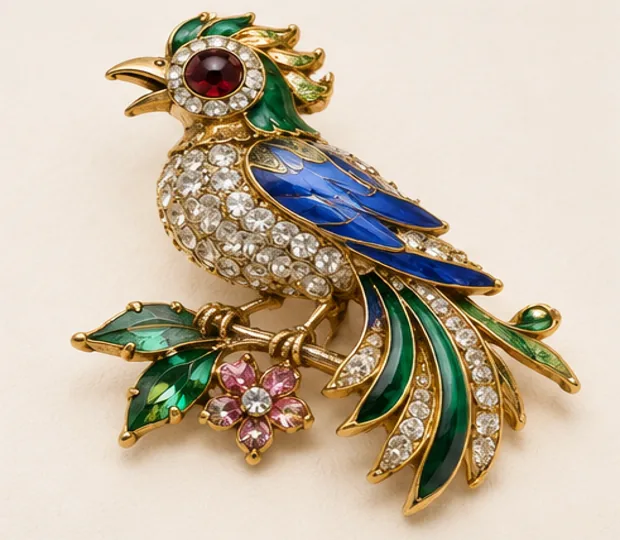
A maker attribution needs evidence beyond stylistic similarity.Animals, insects, flowers, holiday designs and miniature objects.
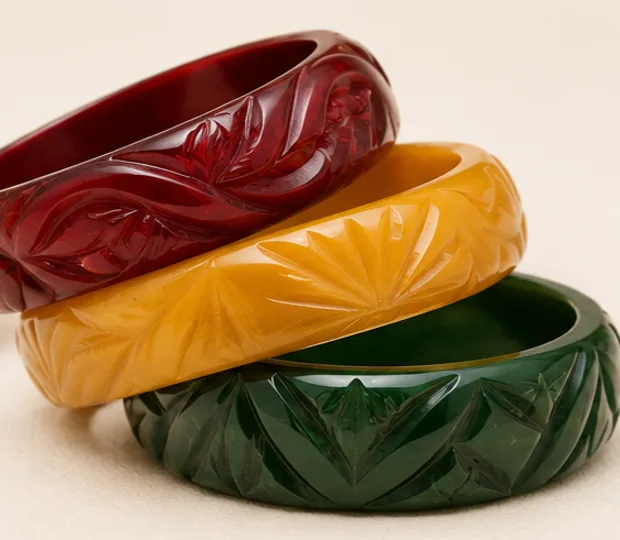
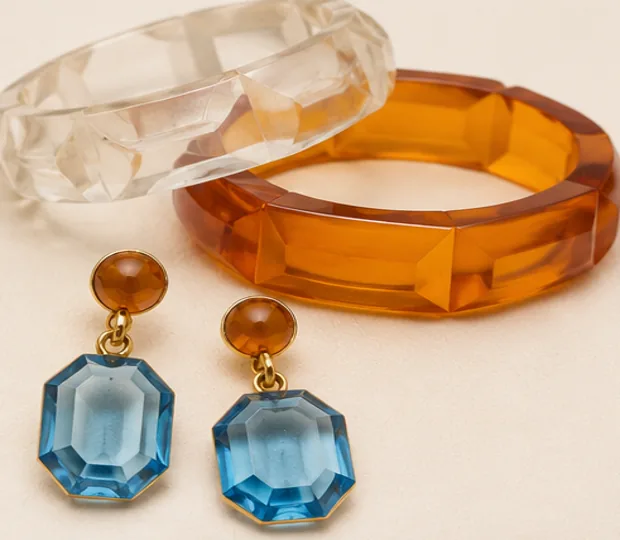
Collectibility depends on condition, artistry and demand.Explore molded, carved and laminated jewelry in innovative materials.
Distinguish the material before assigning a label.Explore antique and fine jewelry by era, with marketplace examples available directly from each period card.
As an eBay Partner Network Affiliate, we may earn from qualifying purchases through eBay links. Some other marketplace links may also earn us a commission, at no additional cost to you.
Explore jewelry movements and decades below, including the 1950s and 1960s together under Mid-Century.
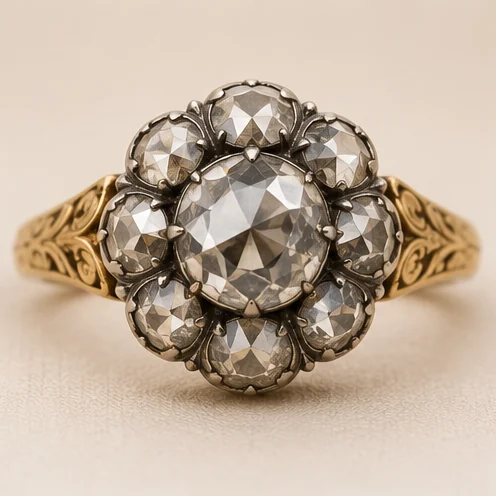
Rose-cut diamonds, closed-back settings, silver over gold, and hand-crafted details.
Hand-fabricated jewelry, often designed to catch candlelight. Surviving pieces are scarce; old components are sometimes reused.
Floral sprays, girandole earrings, rivière necklaces, memorial jewels
Precious gold and silver, paste, garnets, diamonds, pearls, cut steel and sometimes foil-lined gems. Individual hand-made collets, closed settings and irregular workmanship deserve close examination.
Look for an untouched back, original pin fittings and believable wear across every component. Confirm whether gemstones have been reset; moisture can seriously damage foil-backed stones.
Later Georgian-revival jewels and assembled antique components can closely resemble period originals. Do not immerse closed-back or foil-backed jewelry in cleaning solutions.
Dating caution: Closed backs are a clue, not proof. Georgian-style jewelry was made later, and stones may have been reset.
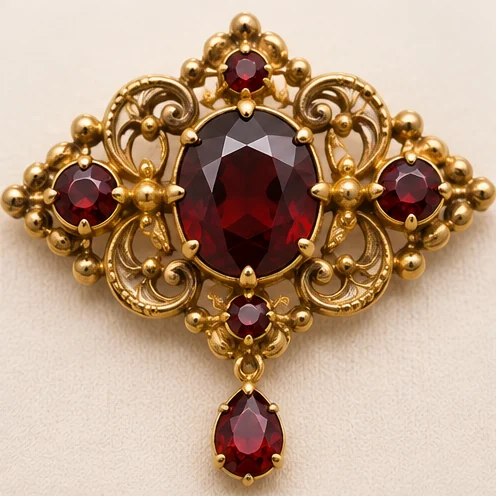
Garnets, lockets, sentimental motifs, revival designs, and elaborate goldwork.
A long era with several distinct fashions, from romantic symbolism to memorial pieces and archaeological revival.
Cameos, lockets, mourning brooches, sentimental motifs, engraved bangles
Early romantic jewelry often used colored gems and seed pearls; later work includes jet, hairwork, black enamel, silver, gold and gold-filled constructions. Factory production expanded over the century.
Separate early sentimental, mid-century mourning and late aesthetic/revival fashions. Study inscriptions, photographs, mourning symbols, metal marks and back construction together.
Not every black jewel is mourning jewelry. Jet, vulcanite, bog oak and molded glass are different materials; later reproductions often imitate Victorian motifs.
Dating caution: Victorian Revival is a style, not an original Victorian date. Later factory jewelry often repeats these motifs.
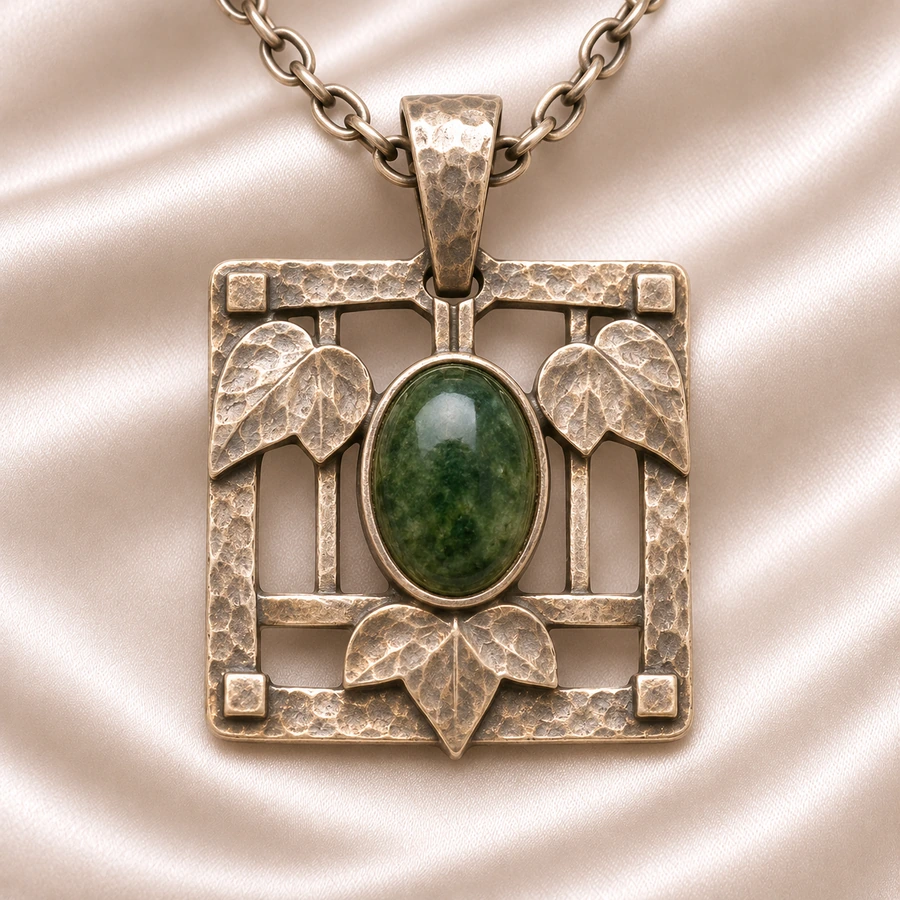
Hand-wrought silver, enamel, cabochons and distinctive workshop craftsmanship.
A craft-centered reaction to industrial mass production. Design and workmanship often mattered more than precious materials.
Hand-wrought pendants, hammered metalwork, enamel plaques, stylized botanical and animal motifs, and jewelry featuring natural stones and cabochons
Hand-hammered silver and copper, enamel, cabochon gemstones and hand-wrought findings suit the movement’s emphasis on workmanship. British guild work and American studio traditions vary.
Examine the reverse for authentic bench construction, honest tool marks, period findings and distinctive workshop marks; research the exact maker where present.
A hand-worked surface does not guarantee early manufacture. Contemporary artisan jewelry still uses Arts & Crafts vocabulary.
Dating caution: Modern studio pieces can share the same handmade aesthetic. Research marks and fabrication.
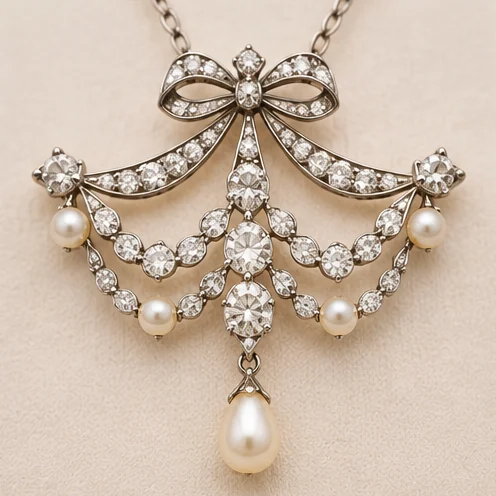
Delicate platinum and diamond settings, bows, garlands, and pearls.
Airy, refined settings and garland motifs flourished alongside Art Nouveau rather than replacing it.
Garland brooches, lavalier necklaces, filigree rings
Platinum and platinum-topped gold enabled delicate pierced, lace-like work, often with milgrain and fine filigree details. Not every pierced setting is technically wire filigree; white gold became more common later, and fashion jewelry imitated these effects.
Check milgrain, knife-edge bars, openwork assembly, natural versus cultured pearls, diamonds and original findings. Metal testing matters for valuable claims.
A modern laser-made filigree setting can resemble antique openwork. Marriage of old gemstones and new mounts is common.
Dating caution: White-metal filigree was widely revived in later decades. Confirm metal and assembly, not just appearance.
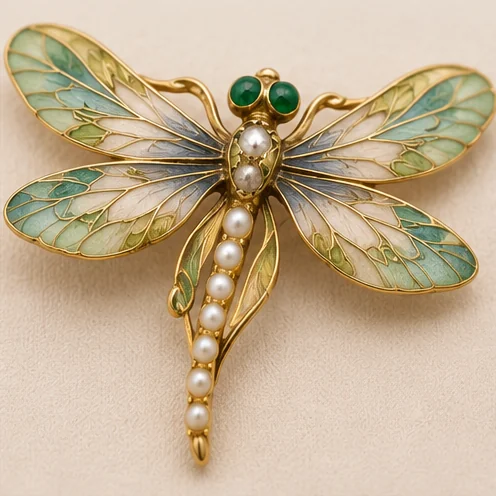
Nature-inspired curves, enamel, floral motifs, and sculptural design.
Art Nouveau jewelry is known for its flowing, nature-inspired designs. Look for curved lines, flowers, leaves, insects, and graceful female figures. Many pieces feature open spaces between the metalwork that are intentionally incorporated into the design. These open areas help create the delicate, flowing appearance that distinguishes Art Nouveau jewelry from more traditional Victorian styles.
The integration of openwork and negative space is an excellent visual identification clue, particularly when distinguishing Art Nouveau from more conventional Victorian jewelry.
Enamel brooches, figural pendants, dragonfly ornaments
Plique-à-jour and other enamels, horn, opal, glass, moonstone, pearls and gold were valued for texture and translucency; diamonds were not always the focus.
Seek coherent organic movement and craftsmanship across front and reverse. Inspect enamel for losses or restoration and carefully check delicate wings, stems and joints.
Late-20th-century fantasy jewelry revives dragonflies, mermaids and flowing lines. Style alone is not an authentication method.
Dating caution: Art Nouveau-inspired motifs were revived throughout the 20th century; a dragonfly alone does not date a piece.
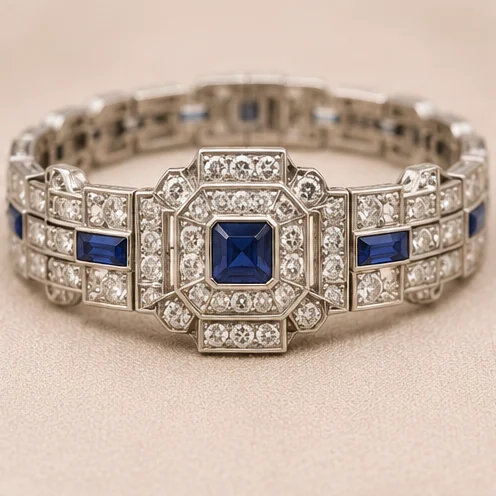
Stepped geometry, strong symmetry, and contrasting stones in crisp architectural designs.
Art Deco jewelry combines architectural geometry, balanced repetition, and striking contrasts. Stepped forms and precisely arranged stones create a crisp, streamlined appearance, while stylized natural and Egyptian Revival motifs add variety.
Geometric brooches, panel bracelets, long earrings, sautoirs, and stylized Egyptian Revival motifs
Platinum, white gold, onyx, diamonds, rock crystal, jade, coral, enamel and calibré-cut colored stones produced crisp high-contrast compositions.
Look for precise symmetry, stepped silhouettes, repeated patterns, and stones arranged as part of the geometry. Examine construction, repairs, and maker marks before assigning a period date.
Art Deco revival is widespread; not every geometric 1980s brooch or modern diamond ring belongs to the 1920s or 1930s.
Dating caution: Art Deco Revival pieces from the 1970s–1990s can look remarkably convincing.
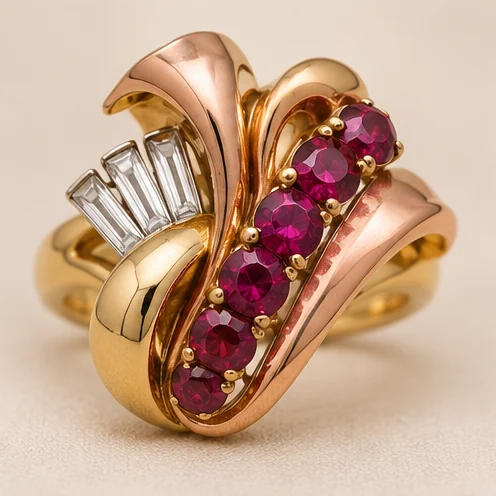
Sculptural yellow and rose gold, rubies, and architectural 1940s designs.
Sculptural volume and substantial-looking metals dominated; romantic curves began replacing Deco’s hard edges.
Voluminous bow brooches, chunky bracelets, stylized flowers
Yellow and rose gold dominated many fine pieces; gold-tone costume jewelry used plated base metals, molded glass, rhinestones and large sculptural settings.
Inspect broad links, scrolls and floral forms, hollow-backed construction, clasp function and any replacement stones. Distinguish 1940s production from later retro-style pieces.
Big rose-gold color and bows are not exclusive to wartime jewelry. Brand dates and construction offer stronger corroboration.
Dating caution: Retro describes a historical jewelry style here, not simply modern reproduction.
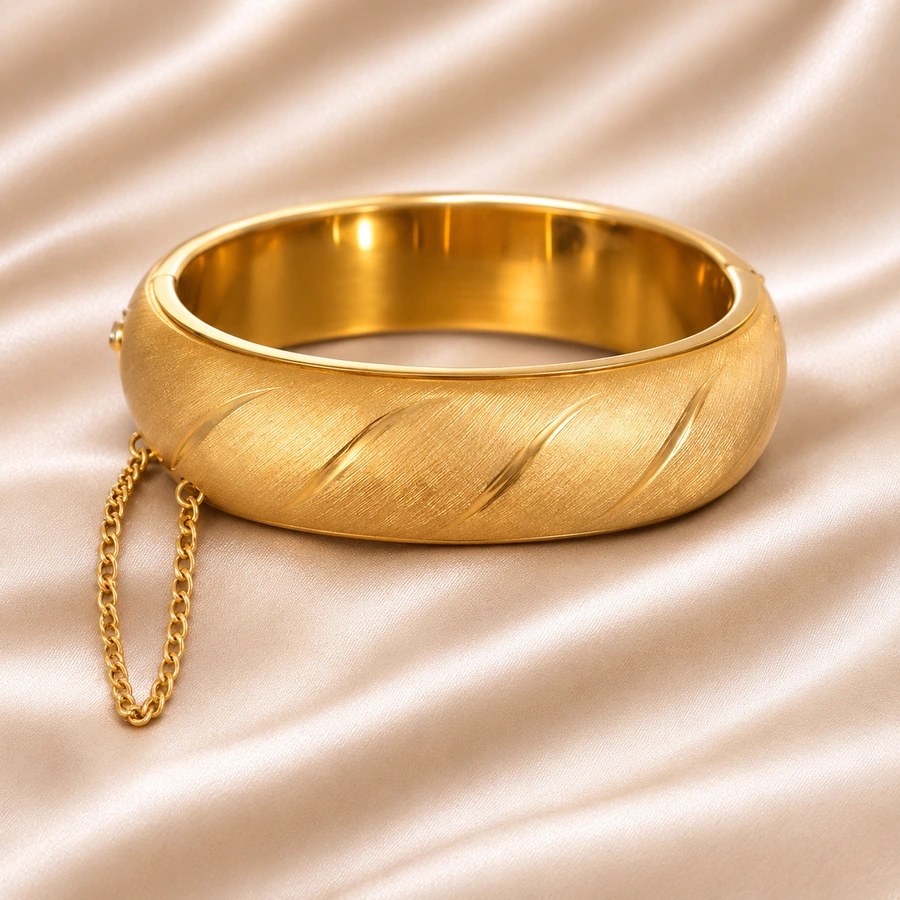
From elegant 1950s rhinestone sets and floral brooches to bolder 1960s modernist designs, Mid-Century jewelry also featured faux pearls, thermoset plastics, cocktail rings and a range of textured finishes, including Florentine.
Mid-Century jewelry ranged from polished rhinestone parures, faux pearls and dimensional floral brooches in the 1950s to bolder abstract, sculptural and modernist designs in the 1960s. Florentine and other textured metal finishes were among the many treatments used.
Rhinestone parures, dimensional floral brooches, cocktail rings, faux-pearl jewelry, thermoset and Lucite designs, textured-metal pieces and modernist forms
Rhinestones, faux pearls, thermoset plastics, Lucite, enamel, sterling silver and gold-tone or gold-filled metals were widely used. Florentine, brushed, engraved and polished finishes appeared on many kinds of jewelry.
Compare maker marks, findings, stone settings, metal finishes and surface wear. Examine the backs of molded thermoset pieces and check whether coordinated sets originally belonged together.
Aurora borealis stones do not automatically date all pieces to the 1950s; replacement stones and later reissues are possible.
Dating caution: Florentine texture and other decorative finishes are not exclusive to this era. Date jewelry using a combination of marks, materials, construction, and design.
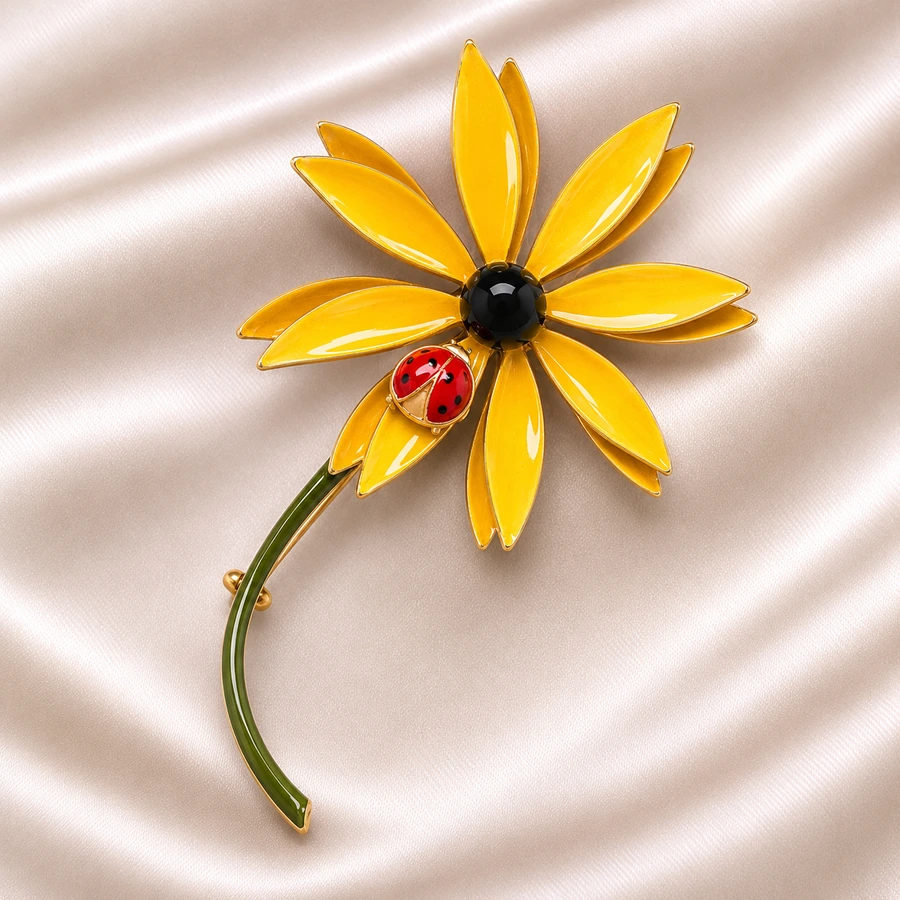
Colorful enamel flower pins, modernist silver, long pendants, chunky chains and natural materials.
Flower-power fashion carried brightly colored enameled metal flower brooches from the late 1960s into the 1970s, alongside earthy materials, silver, large pendants, and statement chains.
Colorful enameled flower brooches, bold chains, modernist metalwork and large pendants
Bright enamel over metal was especially visible in flower-power brooches; sterling silver, hammered and cast metals, chunky chains, natural stones, wood and shell appeared alongside molded plastics and synthetic stones.
Consider the maker’s signature, chain types, metal weight, handwork, wear to finishes and any period catalog evidence.
Terms such as tribal, Brutalist or modernist are broad selling labels—not reliable maker or date evidence.
Dating caution: Later reissues can use older designs, molds, or trademarks. Check maker history.
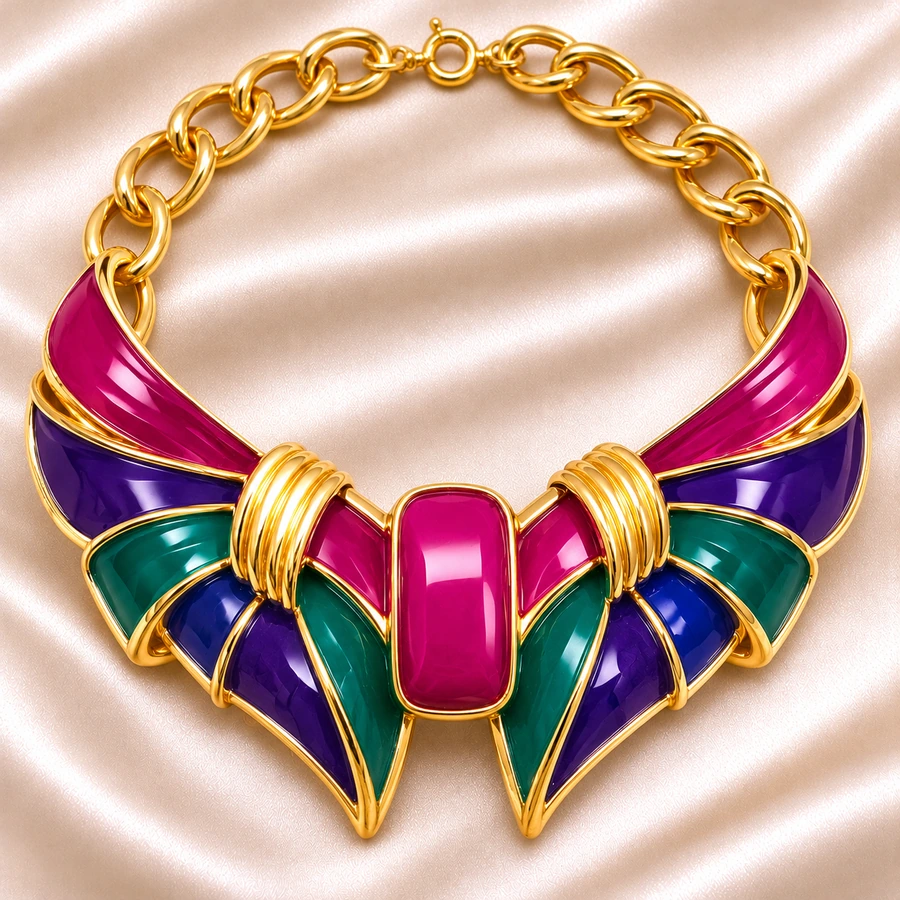
Oversized 1980s runway-inspired jewelry, sculptural gold-tone statements, dramatic proportions, enamel and designer details.
Oversized 1980s runway-inspired jewelry brought dramatic scale, sculptural forms and bold designer statements to high-fashion looks.
Oversized runway-style earrings, chunky chains, wide cuffs, dramatic collars and statement brooches; designer influences include Yves Saint Laurent, Chanel, Givenchy, Christian Dior and Karl Lagerfeld
Gold-tone metal, resin, polished enamel, faux gemstones and logo hardware supported dramatic fashion jewelry, while fine designers explored distinctive bold gold and gem settings.
Study designer and licensee signatures, construction quality, clip mechanisms and branding; separate genuine labeled designs from lookalikes.
Designer logos are frequently copied. Verify hallmark style, ownership history and the specific collection before paying a designer premium.
Dating caution: Designer trademarks are often licensed; distinguish the designer label from the manufacturer.
Follow what fascinates you—cameos, sentimental pieces, vintage watches and more. Explore collecting guides before browsing available examples.
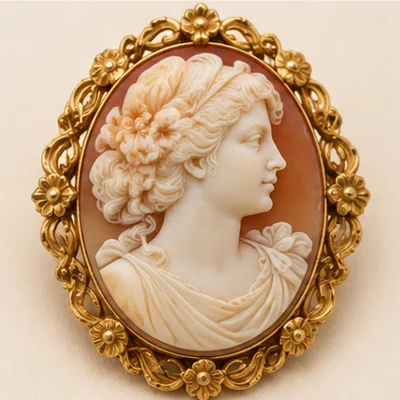
Shell, hardstone, lava and portrait carvings
Fine carving, strong relief, expressive detail, rare subjects, original mounts, and undamaged shell or hardstone. Compare the front and reverse under magnification.
Right-facing profiles are more common; left-facing portraits can be less common, but direction alone does not prove age, authenticity, or higher value.
A long, straight or aquiline “Roman” nose is often associated with 19th-century carvings. Shorter or more upturned noses and changing hairstyles may point toward later work. These are stylistic tendencies—not a reliable date stamp.
Study shell or stone material, carving tool marks, costume details, brooch hinge and clasp, metal marks, and any evidence of remounting. A later mount may hold an older cameo.
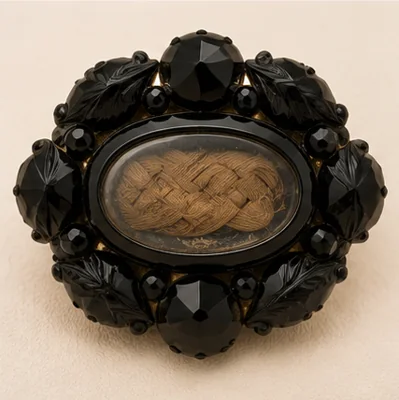
Jet, hairwork, memorial jewelry and symbolism
Jet, onyx, black enamel, woven hairwork, memorial inscriptions, miniature portraits, and well-preserved original settings.
Hairwork could commemorate the deceased or be exchanged as a token of love; inscriptions and documented context help establish its purpose.
Check whether black elements are jet, glass, vulcanite, or other materials; inspect hairwork, back closures, dates, and damage. Avoid aggressive cleaning.
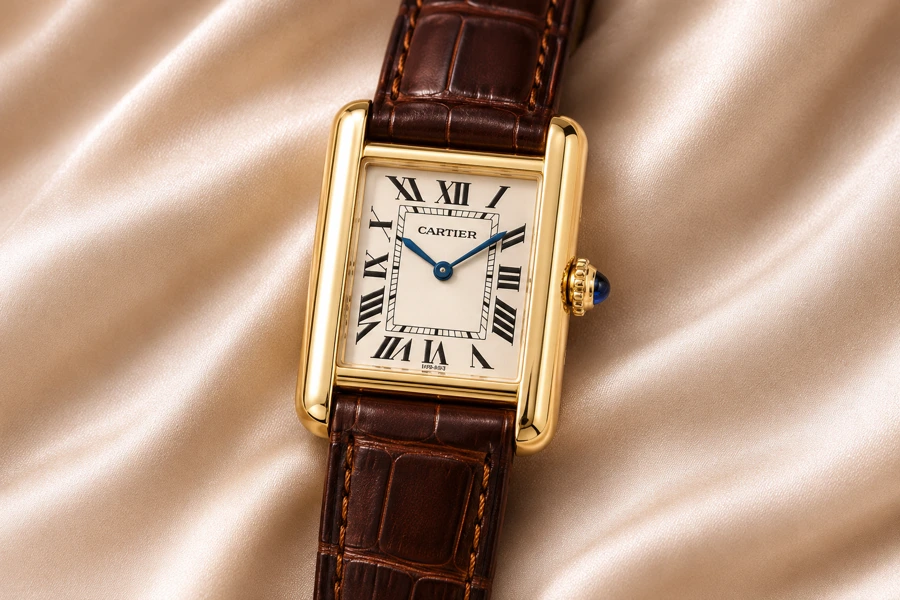
Watchmakers, originality, movements and servicing
Original dials, hands, cases and movements; matching references and serial numbers; complete or documented service history.
Refinished dials or replacement crowns, hands, crystals and bracelets can change collectibility. An attractive restoration is not necessarily original.
Confirm movement function and service needs with a qualified watchmaker. Check case corrosion, water damage, polishing, and replacement parts. Do not assume an old watch is water-resistant.
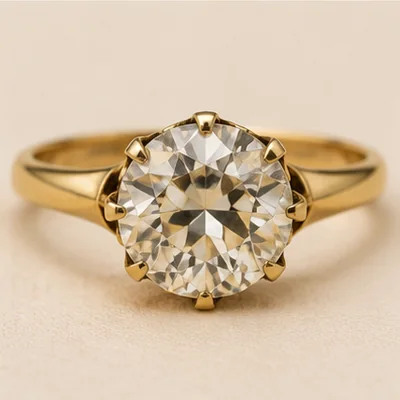
Settings, old cuts, gemstones and hallmarks
Old mine, rose and old European diamond cuts; period mountings; hand engraving, metal marks and documented provenance.
Stone cuts and setting styles offer context, but rings are often resized, reset, or repaired. A period-style mounting is not always period-made.
Examine worn prongs, chips, fractures, thin shanks and later alterations. Valuable stones and precious metals may warrant a qualified gemological assessment.
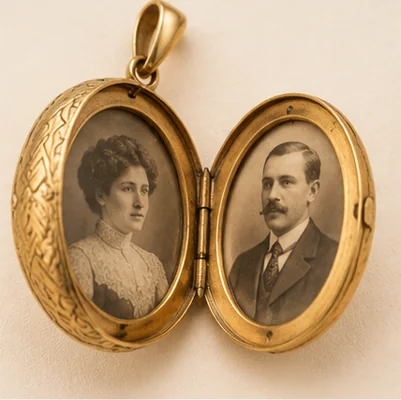
Miniatures, enamel, photographs and keepsakes
Original photos, hand-painted portraits, enamel work, quality engraving, maker marks, and an intact hinge and closure.
Study the metalwork, monograms, engraving, photograph type and fashion. Original portraits or inscriptions can strengthen provenance, but photographs may have been added later.
Avoid exposing old photographs, painted miniatures and fragile enamel to water, polishing compounds or harsh light.
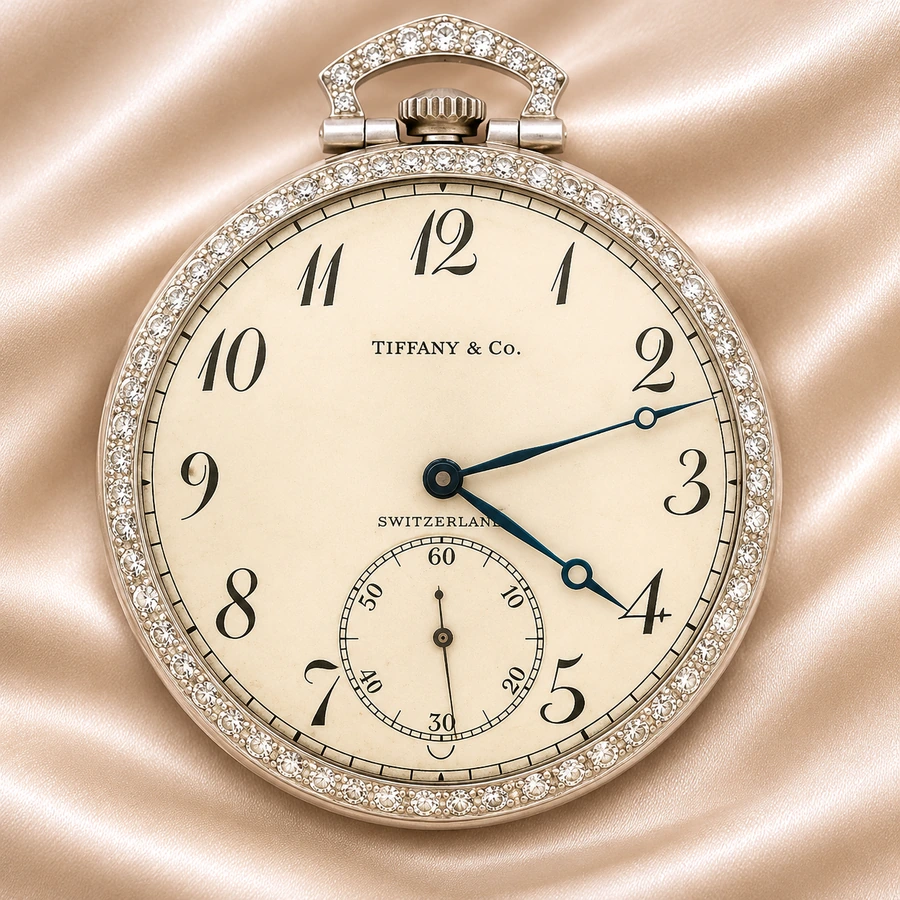
Cases, movements and historic watchmakers
Documented makers, distinctive movements, original enamel dials, unusual cases, and fine decorative engraving.
Movement maker, case maker, material and serial information can differ. Verify the movement and case belong together; replacements are common.
Do not force a stuck crown or key. Have older mechanisms checked by a qualified watchmaker and budget for specialist servicing.
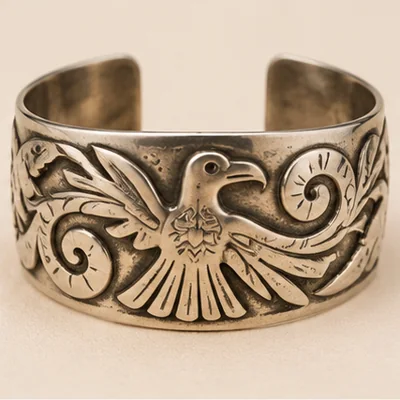
Taxco, Spratling, Los Castillo and hallmarks
Well-executed Taxco and Mexican modernist silver, distinctive design, stone inlay, and signatures linked to documented makers.
Check “Mexico,” “Taxco,” sterling marks, individual maker signatures and eagle or other assay marks in their historical context. Marks alone do not prove age or authenticity.
Inspect solder repairs, stone replacements, worn clasps, and aggressive polishing that may erase attractive original patina.
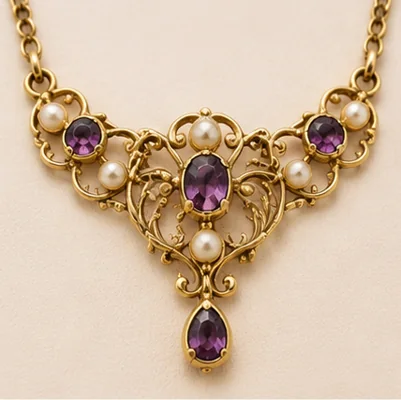
Collectible house signatures and provenance
Documented designs and signature collections from established jewelry houses, with period-correct construction and materials.
Signatures, serial numbers and boxes are supporting evidence, not guarantees. Compare workmanship, hallmark style, stones, and relevant archival records.
For significant purchases, consider independent gemological or specialist authentication, provenance documentation, and an appropriate return policy.
Research references: Jewellery Valuers Association — cameo identification · Antique Trader — dating cameos · The Met — mourning brooch ·
Specialty images are illustrative examples, not photographs of authenticated historical pieces.
Protect the condition, history, and value of the jewelry you love—from costume pieces to family heirlooms.
Start by identifying the material and checking for loose stones, fragile settings, old repairs, foil backs, and glued components. If you're unsure what a piece is made of, avoid soaking it.
Pearls, opals, amber, coral, turquoise, shell cameos, jet, early plastics, and mourning jewelry may react badly to water, heat, solvents, or abrasion. Cleaning methods depend on the material and its condition.
Store pieces individually to avoid rubbing, tangled chains, and pressure on settings. Use clean, nonabrasive supports and avoid extreme heat, direct sunlight, and damp storage.
Homeowners or renters policies may have limits on jewelry theft or loss. For valuable personal pieces, compare scheduled coverage with a dedicated jewelry policy. Insurers may require current appraisals and may cover replacement rather than resale value.
Insurance links are for comparison and research, not a recommendation that a particular policy will cover your collection. No insurance affiliate relationship is represented here.
Care information is general guidance. Appropriate treatment depends on materials, construction, age, repairs, and condition; seek qualified advice before cleaning irreplaceable pieces.
Quick guidance before making an expensive purchase or an attribution.
Look for distinctive design, original condition, quality of construction, documented attribution, and demand. Scarcity alone does not establish value.
Compare completed sales and documented examples rather than relying on asking prices.
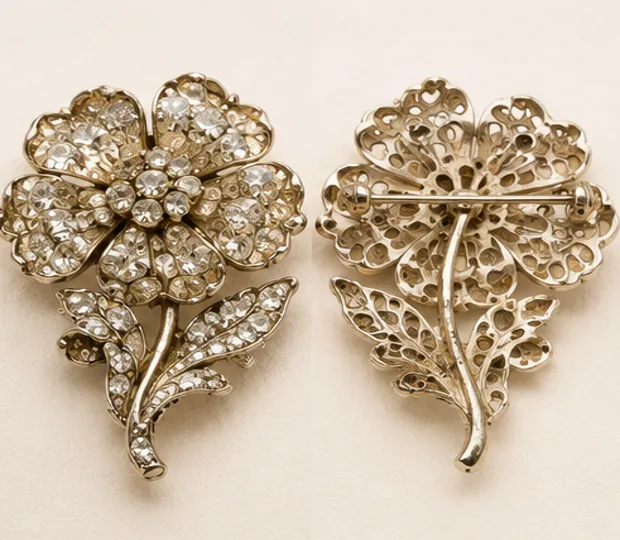
Juliana is the name collectors use for jewelry made by DeLizza & Elster. The jewelry was generally unmarked, though an original Juliana paper hangtag occasionally survives. Identification relies on comparing the design, stone arrangement, settings, and especially the construction on the reverse with documented examples.
Visit Is It Juliana Jewelry?, a searchable, curator-reviewed database of DeLizza & Elster jewelry. You can search by jewelry type, color, stones, motifs, and construction details.
Important: “Verified” describes a reference record in that archive; it does not automatically authenticate another piece that resembles it. Look for agreement across several details, and note any differences or repairs.